Getting your home comfortable without breaking the bank is a balancing act—especially in a place like Woodburn, OR, where winters can bite and summers can sizzle. Whether you’re considering a full system upgrade or simply trying to rein in monthly bills, a smart budget for heating and cooling is your best friend. Here’s the twist: as a fence pro who plans projects down to the last post and panel, I’ve learned that the same planning discipline applies beautifully to HVAC. Let’s build a straightforward, practical budget for your home’s comfort—without the stress.
Heating and Air Conditioning in Woodburn, OR,HVAC Company Woodburn, OR,HVAC Contractor Woodburn, OR,Heating & Cooling,Air Conditioning,Heating
When you’re searching for an HVAC Company in Woodburn, OR, you want value, reliability, and a plan. Budgeting is about more than picking a price—it’s about life-cycle costs: upfront installation, energy efficiency, maintenance, and how long your system lasts. A seasoned HVAC Contractor in Woodburn, OR can help you balance:
- Initial equipment cost vs. long-term utility savings Proper sizing (no more “bigger is better” myths) Rebates, tax credits, and financing options Maintenance strategies that prevent expensive breakdowns
Aim for a system that matches your home, your climate, and your lifestyle—not just a sticker price.
Start With an Energy Audit: Know Before You Buy
Before pricing new Heating & Cooling equipment, get an energy audit. It’s like measuring your yard before ordering fencing—guessing leads to waste.
What an audit reveals:
- Air leaks and insulation gaps (windows, doors, attic) Ductwork leakage and pressure issues Inefficient appliances and thermostat habits
Why it matters:
- You might downsize your HVAC needs by 10–30% after sealing leaks and improving insulation. Smaller systems cost less upfront and run more efficiently.
Pro tip: Many utilities near Woodburn offer low-cost or free audits—ask your HVAC company for local programs.
Right-Size Your System (Manual J): The Budget Saver Most People Miss
Oversized systems short-cycle, wear out faster, and spike bills. Undersized systems struggle and run forever. Insist on a Manual J load calculation for your Woodburn home.
Key variables your contractor should review:
- Square footage, ceiling height, window types Orientation and shading Insulation values and air-change rate Occupancy patterns
If your contractor “eyeballs it,” that’s a red flag. Right-sizing is like using the correct post depth for a fence—get it wrong, and everything wobbles.
Compare System Types: Furnace, Heat Pump, or Ductless?
Woodburn’s climate is ideal for heat pumps, but the right choice depends on your home.
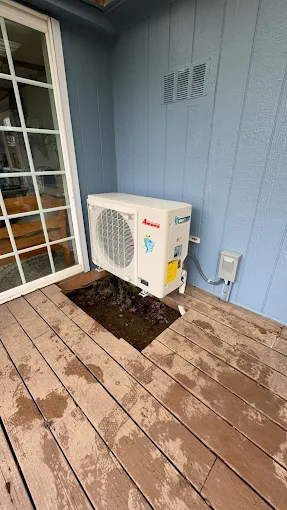
- Electric Heat Pump (ducted) Best for: Balanced heating and cooling with strong efficiency Budget notes: Moderate installation cost, great year-round savings Look for: High HSPF2 and SEER2 ratings Gas Furnace + AC Best for: Homes with existing gas lines and ducts Budget notes: Lower install cost, variable fuel prices; choose 2-stage or modulating for comfort Ductless Mini-Split Best for: Add-ons, older homes, or targeted comfort zones Budget notes: Higher unit cost per zone but low install complexity and excellent efficiency
Rule of thumb: If your ducts are leaky or your home is partially remodeled, ductless can be cheaper over time. If your ducts are good, a variable-speed heat pump is a budget win.

Decoding Efficiency Ratings: What Actually Impacts Your Bill
Efficiency ratings aren’t just alphabet soup—they dictate your monthly costs.
- SEER2 (cooling): Higher = lower summer bills. Aim for 15–18+ in Woodburn. HSPF2 (heating): Higher = lower winter costs. Aim for 8–9.5+ for heat pumps. AFUE (gas furnace): 95%+ is standard; consider 96–98% for long-term homes.
Don’t blow the budget chasing the absolute highest tier. Often, the sweet spot is mid-to-high efficiency paired with good insulation and smart controls.
Budget Framework: The 5-Bucket Method (Fence Pro Style)
Like any well-planned project, break your HVAC budget into clear buckets:
Equipment and Installation- 40–60% of total cost Includes labor, permits, and removal of old equipment
- 10–25% Sealing, repairs, balancing—often the best ROI you’ll get
- 10–20% Insulation, air sealing, weatherstripping—reduces load instantly
- 5–15% Smart thermostat, filtration (MERV 11–13), optional UV, ERV/HRV if needed
- 5–10% Annual tune-ups and extended parts/labor coverage
This structure keeps you from overspending on shiny equipment while neglecting the “posts and rails” that keep performance solid.
Financing, Rebates, and Tax Credits: Free Money You Shouldn’t Miss
Oregon homeowners have access to meaningful incentives:
- Federal tax credits: Through the Inflation Reduction Act, qualifying heat pumps, furnaces, and efficiency upgrades can earn credits (check current caps and eligibility). Utility rebates: Local utilities near Woodburn often provide rebates for high-efficiency equipment and duct sealing. Manufacturer promotions: Seasonal discounts, 0% APR financing, or extended warranties.
Action steps:
- Ask your HVAC Contractor in Woodburn, OR to provide a written incentives estimate. Prioritize upgrades that qualify for both rebates and credits (heat pumps often lead the pack). Consider financing for cash-flow-friendly monthly payments—especially when pairing equipment with insulation work.
Maintenance Math: Small Costs, Big Savings
Skipping maintenance is like leaving a fence post unsealed—it’ll fail sooner. Budget for:
- Biannual tune-ups (spring AC, fall heat) Filter changes every 1–3 months (MERV 11–13 for most homes) Duct inspection every 3–5 years Condensate line cleaning and outdoor coil washing
Result: 5–15% lower energy bills and longer equipment life. It’s the cheapest insurance you can buy for your HVAC investment.
Smart Thermostats and Zoning: Comfort Without the Bloat
Smart controls can reduce energy use without sacrificing comfort.
- Smart thermostats: Geofencing, schedules, and adaptive learning Zoning: Multiple areas with independent control, ideal for multi-story homes or additions Set-and-forget rules: 68–70°F in winter (occupied), 62–65°F away; 74–76°F in summer (occupied), 78–80°F away
Think of zoning as adding gates to your fence—control flow where it matters most.
Heating and Air Conditioning Budgeting in Woodburn, OR: Tips from a Fence Pro
Here’s the straight talk:
- Measure before you spend: Energy audit + Manual J Fix the foundation: Seal ducts and envelope first Choose the right system for your home, not the fanciest one Capture every rebate and credit Maintain it like you mean it
The methodical, step-by-step approach I use on fencing projects will keep your Heating & Cooling budget honest, predictable, and efficient.
Sample Budget Snapshot (Typical Woodburn Home)
Assuming a 1,800–2,200 sq. ft. home:
- Ducted Heat Pump (mid-high efficiency): $10,000–$16,000 installed Ductless Mini-Split (2–3 zones): $7,000–$12,000 installed Duct sealing/balancing: $800–$2,000 Insulation/air sealing upgrades: $1,500–$3,500 Smart thermostat + IAQ upgrades: $250–$1,200 Annual maintenance plan: $180–$350
Apply incentives, and your net cost can drop by $1,000–$4,000 or more, depending on eligibility.
Common Mistakes to Avoid (and What To Do Instead)
- Mistake: Choosing the lowest bid. Do this: Compare scope, warranty, and load calculations—not just price. Mistake: Ignoring ductwork. Do this: Test, seal, and balance; you’ll feel the difference. Mistake: Oversizing for “future-proofing.” Do this: Right-size now; plan for modular upgrades later. Mistake: Skipping maintenance. Do this: Get a service plan from a reputable HVAC Company in Woodburn, OR.
Conclusion: Build a Budget That Works—And Keeps Working
Heating and Air Conditioning Budgeting in Woodburn, OR: Tips from a Fence Pro isn’t about spending more—it’s about spending smart. Start with an audit, right-size your system, optimize your home’s envelope, leverage incentives, and commit to maintenance. With a thoughtful plan and a trustworthy HVAC Contractor in Woodburn, OR, you’ll lock in year-round comfort and predictable costs.
FAQs
Q1: What’s the best HVAC system for Woodburn’s climate?
A: High-efficiency heat pumps excel here, but if you’ve got good ducts and access to natural gas, a dual-fuel or efficient furnace plus AC can also be cost-effective.
Q2: How much can insulation improvements reduce my HVAC size?
A: Often 10–30% after air sealing and attic insulation, which can lower both equipment and operating costs.
Q3: Are heat pumps efficient in cold weather?
A: Yes—modern cold-climate heat pumps deliver efficient heat well below freezing. Look for high HSPF2 and variable-speed compressors.
Q4: How often should I service my system?
A: Twice a year—cooling tune-up in spring and heating tune-up in fall, plus regular filter changes.
Q5: How do I hvac contractor avoid overspending on features I don’t need?
A: Focus on correct sizing, solid mid-to-high efficiency, duct integrity, and a smart thermostat. Let your contractor justify any premium features with payback math.
If you’re ready to plan with purpose, revisit this guide—Heating and Air Conditioning Budgeting in Woodburn, OR: Tips from a Fence Pro—and use it as your blueprint for comfort that lasts.
Name: Whirlwind Heating & Cooling
Address: 4496 S Elliott Prairie Rd, Woodburn, OR 97071
Phone: (503) 983-6991
Plus Code: 46GG+79 Woodburn, Oregon
Email: [email protected]